Creating a Culture of Reading at Home
- Mar 29
- 5 min read

What a time to be alive. As parents, we are in the throes of a battle we never asked to be in: humanity vs. technology, attention vs. ignoring, literacy vs. illiteracy, you get the idea. It’s AI, an attention economy, a fight to be literate. It’s iPad kids, emotional regulation, and boundaries.
I don’t have the answers to everything, and I never will. I find freedom in my ability to admit what I don’t know and in my constant search for new information.
But… I do know this:
In our family, we are raising readers.
In an unimaginable future on the cusp of fundamental change due in part to AI, our humanity will matter more than ever. What could be more human than the sharing of stories?
The ability to communicate, to connect, to read, to write, to empathize. To think deeply, creatively, critically. These are the skills I want my children to have. These are the skills I will fight for. So where do we start building these skills? In our homes and families, through reading.
A book is just a book until it’s not. The board book you hold for your toddler could just be ink and cardboard, a shelf decoration, or sometimes, a chew toy. But if you look closely and think deeply, you’ll start to see. The board book in your hand is, at its smallest and biggest, the entry point to literacy.
It's the starting line for learning about the world around you, the perspectives of “others”, about the physical world, about history, about potential and imaginary worlds, about reality and changes. It’s comfort and connection and thinking, all bound in one neat little package.
This is what I fight for. For parents to see that the little books matter. That from the start, we as parents are our children’s best hope for a literate future, for a better future for our planet.
Are you up for the challenge? Here are a few things you can add to your life to turn your family into a Reading Family.
Make Books Visible and Reachable
Children read what they see. When books are an option, they will inevitably reach for them. When books are tucked away in drawers or stacked out of reach, they become occasional objects instead of daily companions. A reading culture starts with access.
Keep books in multiple rooms, not just bedrooms. In the bathroom, try books about potty time. In the kitchen, try cookbooks or books about food. Outside, try books about gardening, exploration, and outdoor art.
Store them low enough for children to choose independently. Front facing floor book shelves, baskets, or even just propped up on the floor.
Place a few in the car or stroller for waiting moments. Think appointments, long car rides, waiting for dinner to be delivered (or cooked), waiting for friends to come over, etc. When there is empty time, fill it with books. Audio books “count”, too!
Rotate books occasionally to refresh interest. Use the Harbor Library, use the TKS Elementary Library (open to the community from Sunday to Thursday, 3-4 pm, able to check out up to ten books on your account. Email lindsay.zielinski@thekaustschool.org for more info!)
Turn Yourself into a Reader
Children are like sponges and soak up what they see and hear. I learned this the hard way when my daughter was two. She opened the fridge, pulled out a carton of eggs, and promptly dropped them on the floor.
By the time I turned around, her hands were empty, mouth opening with a sigh and . . . a curse word she had obviously heard me use before. “S**t. . .” she whispered. “I dropped the eggs.” I laughed out loud and promptly cleaned up my vocabulary. A hilarious example of the point I’m trying to make here is . . . if you want your child to be a reader, you need to be one, too.

What you think isn’t being heard or watched, IS. If in your empty moments you are reaching for your phone to scroll, they will want that too. If you reach for a book, they will want that too. When children see adults reading — novels, cookbooks, magazines, articles — reading becomes an example, a model to follow.
Our children idolize us and what we do and want to be like us (for now... when the high school years come, we can revisit this). But for now, in these ages, seeing us read becomes a beacon for them. Reading isn’t something we just do at school; it’s something we do in our everyday lives.
Let your children see you read for pleasure. Anything. Physical books are wonderful, but if you are reading on a screen, tell them explicitly. “I’m reading this book on my phone, isn’t that cool?” or “Look how many books my eReader can hold!”
Talk casually about what you’re reading. Don’t give specifics if it’s not appropriate (ACOTAR fans, I’m looking at you), but broad plot points can be fun.
Give books as gifts for birthdays and share them with your friends. Show them that you are giving a book to a friend for their birthday or sharing a book with a colleague because you loved it. Tell your child what you are doing! “I’m sharing this with Mabel’s mom because I know she’s a reader too and would love it, then I can talk about it with her!”
Visit the library or bookstore as a family routine. Harbor Library, bookstores on vacation, the TKS Elementary Library. Make your routine a family treat, something to look forward to. On Tuesdays, we visit the library, then Baskin-Robbins! Or on Wednesdays, we visit Harbor and have Breakfast for Dinner! Anchor your book experiences to other fun, too.

Creating a culture of reading at home is not about perfection or performance. It is about presence and repetition. About modeling and conversation.
When books are visible, modeled, and woven into ordinary routines, children begin to see reading not as a task but as a natural part of life. It doesn’t have to be for a long time, either. A few moments connecting and reading together add up. Over time, this quiet consistency shapes identity. They grow up knowing — without ever needing to be told — that in this family, we read.
Who knows what our future will hold, but I’m not too worried about it. I know that in my family, we read. And reading is the key to unlocking evergreen skills that will help us find our way in an ever-changing world.
Check out this full list of our posts on reading with kids:
Reading with Babies
Reading with Toddlers
Reading with Preschoolers
Ps.
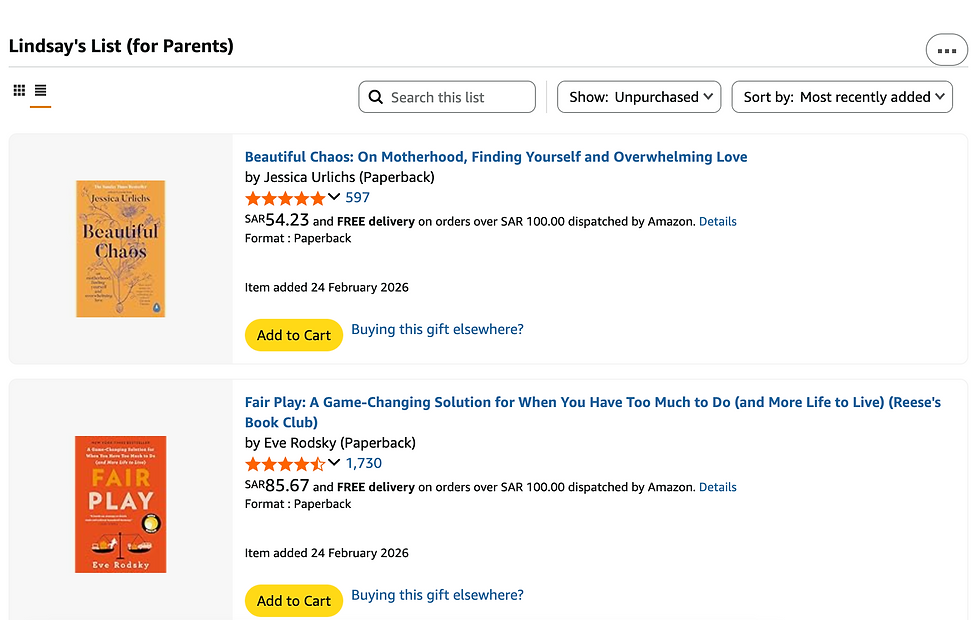
Here’s a list of my favorite books for grown-ups. No affiliation or anything, just a place you can see some of my favorites recently, from self-development to parenting to fiction fun. Enjoy!


Comments